International
UN General Assembly approves Ukraine-Backed resolution, rejecting US proposal
The UN General Assembly approved a Ukraine-backed resolution reaffirming the country’s sovereignty and demanding Russia’s immediate withdrawal. The US, in a shift from its previous stance, introduced a separate resolution calling for an end to the war without naming Russia as the aggressor, leading to divisions within the UN.

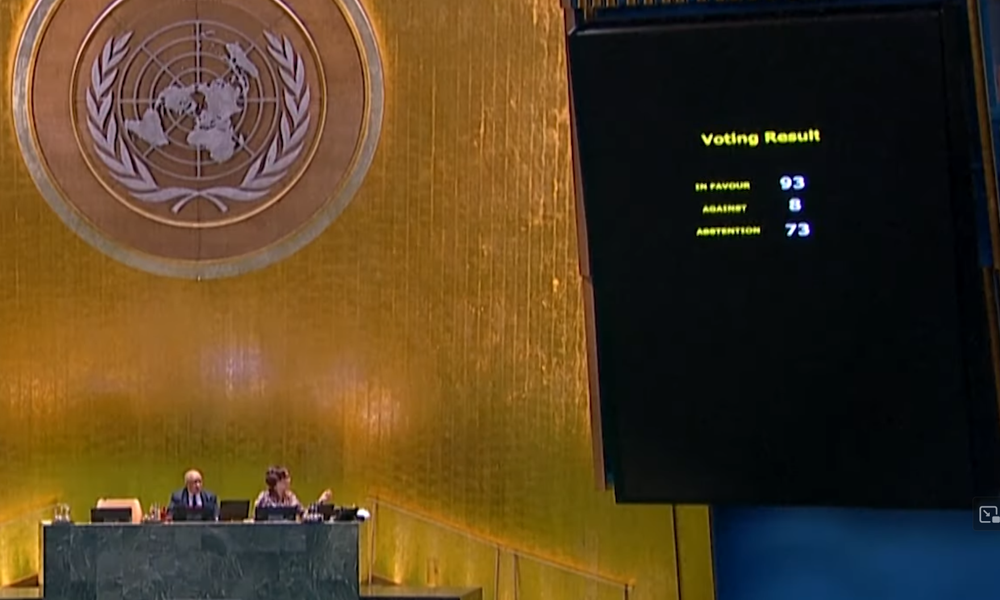
On the third anniversary of Russia’s full-scale invasion of Ukraine, the UN General Assembly approved a resolution demanding Russia’s immediate withdrawal while also adopting a separate US-backed resolution that initially avoided references to Russian aggression.
The vote highlighted deepening divisions between Ukraine, its European allies, and the Trump administration, which has launched direct peace talks with Russia without involving Ukraine or Europe.
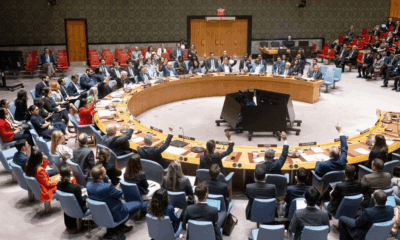
The General Assembly convened under its Emergency Special Session on Ukraine, as the Security Council remains deadlocked due to Russia’s veto power.
The session saw two competing resolutions.
The first, backed by Ukraine and European nations, reaffirmed Ukraine’s sovereignty, condemned Russia’s invasion, and demanded a full and unconditional troop withdrawal.
The second, introduced by the US, called for an end to the war but did not mention Russia’s role in the conflict, focusing instead on broader peace efforts.
In a significant departure from its previous stance, the US voted against Ukraine’s resolution, despite having supported a nearly identical text in 2023, which had received overwhelming backing from 141 countries.
This marked a shift in the Trump administration’s approach, aligning with its recent efforts to seek a negotiated settlement with Moscow.
The US resolution was met with resistance from European nations and Ukraine, which criticised it for omitting Russia’s responsibility for the war.
In response, France and other European nations introduced amendments, adding references to Russia’s full-scale invasion, reaffirming Ukraine’s territorial integrity, and emphasising the need for peace based on UN principles.
These changes brought the US resolution closer in line with Ukraine’s demands. However, the US ultimately abstained from voting on its own amended resolution, signalling dissatisfaction with the European-led revisions.
The final vote saw the Ukraine-backed resolution pass with 93 votes in favour, 18 against, and 65 abstentions.
The amended US resolution was approved with 93 votes in favour, 8 against, and 73 abstentions. While Ukraine voted in favour, the US abstained, reflecting ongoing tensions over Washington’s evolving stance on the conflict.
The UN vote took place as the Trump administration launched direct peace talks with Russia, excluding Ukraine and European allies from negotiations.
This unilateral move has drawn criticism from European leaders, who argue that any resolution to the war must involve Ukraine as the primary stakeholder.
France’s UN ambassador, Nicolas De Riviere, warned that bypassing Ukraine and Europe in peace efforts would establish a dangerous precedent, reinforcing the power of military aggression over international law.
Meanwhile, Russia’s UN representative rejected Ukraine’s resolution and described the conflict as the result of Western interference.
He claimed that the world was on the brink of a wider conflict due to what he called the “anti-Russian project” of Ukraine. Moscow has repeatedly insisted that any resolution must acknowledge the “new realities” on the ground, referring to the territories it has occupied.
The vote also reflected a shift in global sentiment. Previous UN resolutions on Ukraine had received much higher levels of support, with over 140 countries condemning Russia in 2022 and 2023.
The latest vote saw significantly lower numbers, suggesting growing fatigue and shifting priorities among some UN member states. The diminishing support indicates that while many nations still back Ukraine’s sovereignty, fewer are willing to take a firm stance as the war continues into its third year.
The US has now requested a vote in the UN Security Council, where it holds veto power. However, with Russia also holding a veto, the Council is unlikely to pass any binding resolution.
This leaves the General Assembly as the main international platform for addressing the war.
With the Trump administration pursuing a more neutral approach and pushing for negotiations with Moscow, the coming months could see further diplomatic realignments.
European nations have made clear that they will resist any peace process that does not include Ukraine, while Ukraine itself continues to insist that any settlement must be based on a full Russian withdrawal.
The UN vote underscores the growing divisions over how to bring the war to an end—whether through continued pressure on Russia or through diplomatic compromises that Kyiv and its allies fear could legitimise further aggression.