Politics
SDP proposes alternative budget ahead of widely anticipated election-year Budget 2025
The Singapore Democratic Party (SDP) has released its alternative Budget 2025 proposal ahead of Prime Minister Lawrence Wong’s announcement, widely seen as an election budget. The SDP advocates higher corporate taxes, lower GST, nationalised transport, and capped HDB flat prices, contrasting with expectations of government handouts ahead of the polls.

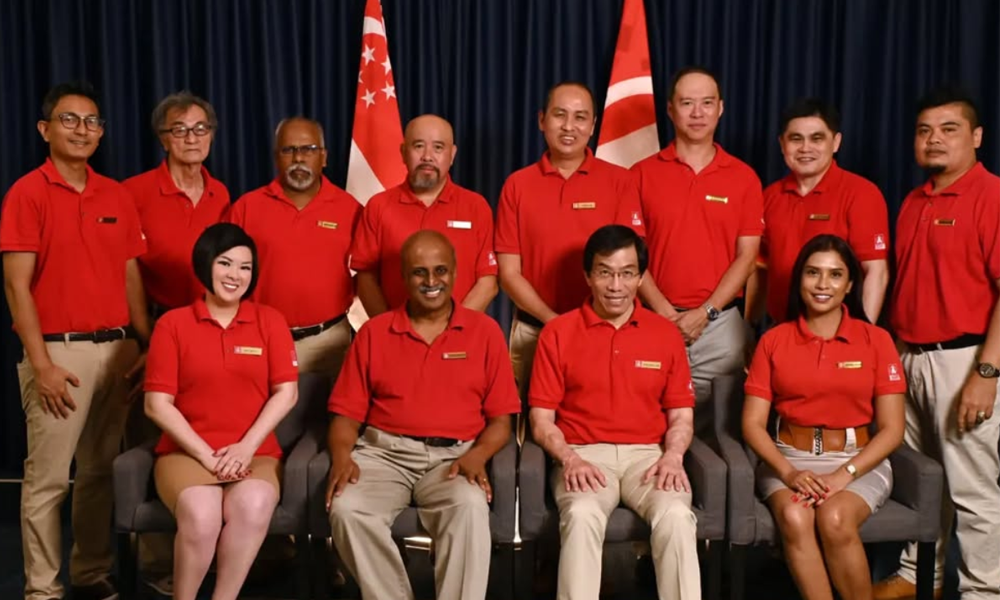
SINGAPORE – Hours before Prime Minister Lawrence Wong’s Budget 2025 announcement at 3.30 pm today, the Singapore Democratic Party (SDP) has unveiled its alternative budget proposal, outlining a vision of economic restructuring through higher corporate taxes, reduced government expenditure, and enhanced social support measures.
Wong’s budget is widely expected to be an election-year budget, with many political observers anticipating significant handouts aimed at winning voter support ahead of the upcoming general election, which must be held by 2025 and is widely speculated to take place in May.
In contrast, the SDP’s proposal focuses on structural changes, positioning itself as an alternative to policies that it argues rely too heavily on short-term financial assistance.
The SDP’s budget proposes a gradual increase in the corporate income tax rate to 20%, aligning Singapore with the global minimum tax rate endorsed by the OECD and G20.
The party also calls for a reduction in the Goods and Services Tax (GST) from 9% to 7%, with a plan to eliminate GST on essential goods like rice and infant formula while increasing GST on luxury goods.
A key policy shift in the SDP’s plan involves housing. The party proposes a Non-Open Market (NOM) scheme that would price HDB flats based on construction and administrative costs, excluding land costs.
This would cap Build-To-Order (BTO) flat prices at S$500,000 for a five-room unit, S$400,000 for a four-room unit, and S$300,000 for a three-room unit, regardless of location. To offset lost revenue, grants for HDB BTO and resale buyers would be halved.
In the transport sector, the SDP advocates for the nationalisation of public land transport, including buses and MRT services, arguing that reinvesting profits rather than distributing them to shareholders would improve service quality. The proposal also calls for the postponement of Changi Airport Terminal 5’s construction until existing terminals reach higher utilisation rates.
Healthcare reforms are a major feature of the SDP’s alternative budget, with a proposed S$18 billion allocation and the creation of a National Health Investment Fund (NHIF).
This initiative would introduce a government-subsidised, single-payer universal healthcare system covering all citizens and permanent residents residing in Singapore for over six months annually.
Additional funding would be directed toward nursing homes, step-down care facilities, and home care services.
The SDP argues that additional revenue can be obtained by reducing government “waste and inefficiency.”
It highlights the costs associated with multiple mayors and controversial public sector spending, citing instances such as the S$880,000 bin centre expenditure by the National Arts Centre. The party contends that by cutting such expenditures, coupled with increased corporate tax revenue, its social initiatives can be funded without excessive reliance on handouts.
Beyond fiscal policy, the SDP frames its budget as a means to enhance public engagement in government spending decisions. The proposal calls for greater scrutiny of public contracts and spending, advocating for more transparency in financial governance.
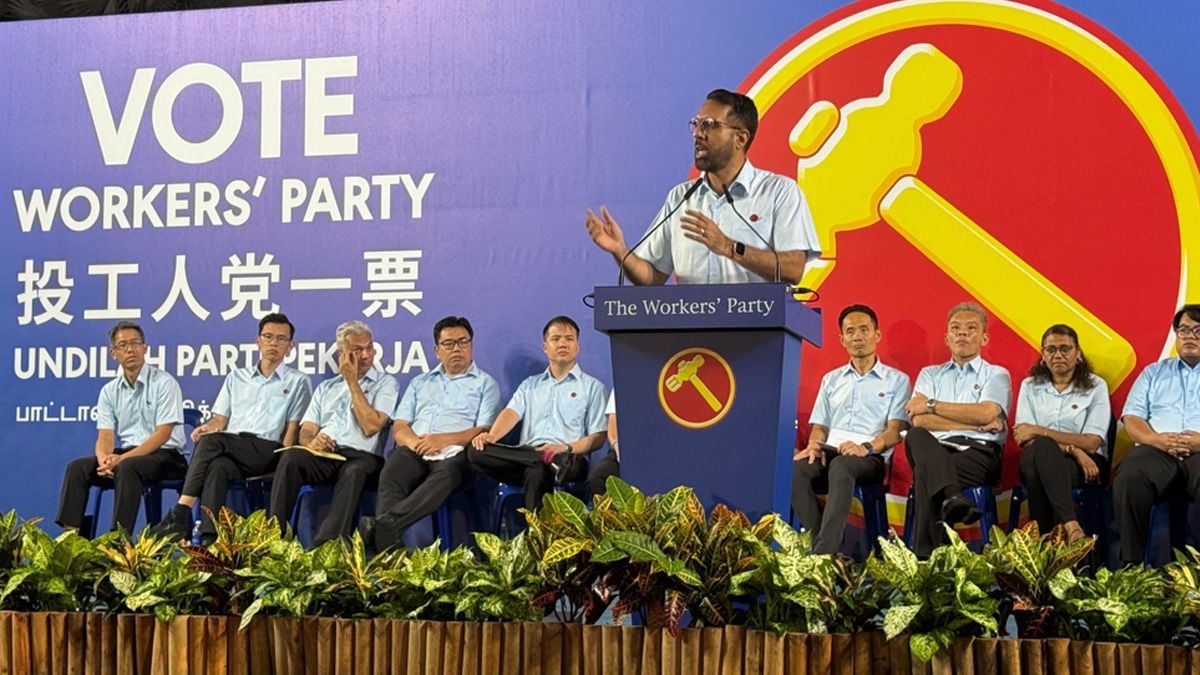
SDP Chairman, Professor Paul Anantharajah Tambyah, speaking on the budget, said, “The SDP has been through all kinds of attacks from the PAP over the years, but we continue to come up with plans and policies for the good of Singaporeans.”
“Our budget proposal reflects what we hear week in, week out from the people, and we hope it will be a wake-up call for the government.”
As Prime Minister Wong prepares to present Budget 2025, many anticipate a package filled with financial assistance schemes aimed at easing cost-of-living pressures and “sweetening the ground” ahead of the polls.
The SDP’s alternative vision provides a contrast to what it characterises as short-term relief measures, instead emphasising long-term economic restructuring and citizen empowerment.
With an election looming, public response to both budgets will likely shape the national debate on Singapore’s economic direction in the months ahead.
The full SDP Budget 2025 proposal can be accessed here: [SDP Budget 2025 Proposal]