Business
Users continue facing issues with ACRA’s Bizfile after December 2024 revamp
Business owners, lawyers, and corporate services providers continue to face difficulties using Bizfile following its revamp on 9 December 2024. The Accounting and Corporate Regulatory Authority (Acra) has extended the penalty waiver for late filings until 15 March 2025 as it works to resolve system issues.

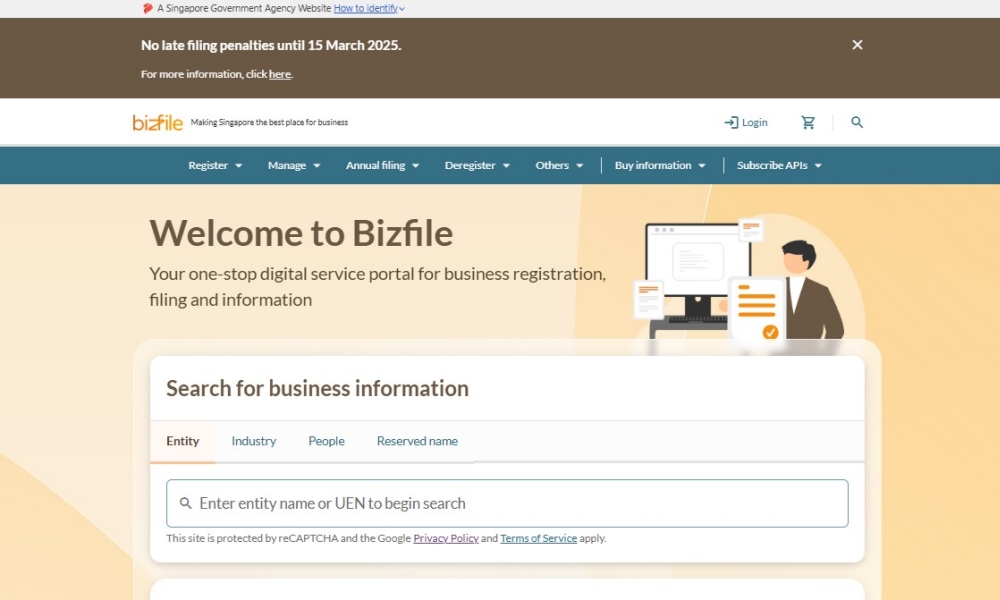
SINGAPORE: Business owners, lawyers, and corporate services providers have reported persistent issues using Bizfile following its revamp on 9 December 2024.
In response, the Accounting and Corporate Regulatory Authority (Acra) announced an extension of the penalty waiver for late filings until 15 March 2025 as it works to resolve the problems.
This marks Acra’s third extension since 21 December 2024.
The decision comes after continued complaints about delays in registering new firms, updating key appointment holders, and inaccuracies in business data.
Users have reported instances of missing or incomplete names in the system, leading to further complications.
According to The Straits Times, Acra stated that it has been collaborating with its technology vendor to address these issues.
“Most of the functions on Bizfile, including… registration of businesses and annual return filings, are now operating as intended,” the authority said.
However, some users may still encounter intermittent issues during certain transactions, which will require additional time to resolve.
Acra acknowledged the inaccuracies in the business data and stated that it is actively working with affected users to rectify these issues.
“We apologise for the inconvenience caused,” it added.
The agency also urged users needing time-sensitive transactions to contact its helpdesk for assistance.
Persistent frustrations among users
Several Bizfile users have reported prolonged delays and poor communication, with business service providers facing major disruptions.
Some transactions that previously took minutes are now taking weeks, causing missed deadlines and financial losses.
While filing processes have improved since December, users are still adjusting to the new platform, and technical issues remain.
Acra extends deadline for filings
Due to the system disruptions, Acra has extended the deadline for annual returns and other filings originally due between 9 December 2024 and 28 February 2025 to 15 March 2025.
No late lodgement penalties will be imposed during this period.
Acra maintained that the volume of successful transactions in January 2025 is comparable to the same period in 2024, with most business registrations still being completed within the same day.
However, the agency did not specify an expected timeframe for pending transactions. It also noted that some application delays were due to clarifications needed from applicants.
Government’s apology for ACRA’s NRIC breach sparks accountability and data protection concerns
The Bizfile revamp previously sparked public outcry and privacy concerns in December when users discovered that full NRIC numbers were accessible in the system’s public database.
On 12 December, veteran journalist Bertha Henson highlighted concerns over the ease of accessing full NRIC numbers via ACRA’s new Bizfile system.
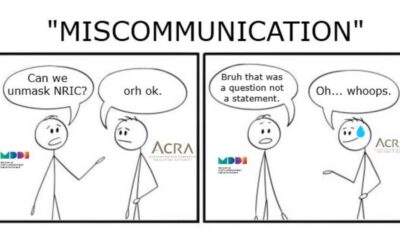
The issue stemmed from a “miscommunication” between ACRA and the Ministry of Digital Development and Information (MDDI) regarding a July directive to phase out masked NRIC numbers for government services.
ACRA mistakenly applied this to its public-facing portal, enabling access to full NRICs when the system launched on 9 December.
MDDI Minister Josephine Teo explained that the directive aimed to dispel the misconception of NRICs being confidential, as they serve as unique identifiers. However, she acknowledged risks like identity theft and emphasised reducing reliance on NRICs for authentication.
The government’s 19 December apology framed the incident as a coordination lapse but failed to provide clear accountability, leaving many Singaporeans dissatisfied. Critics condemned the explanation as inadequate, questioning why stronger safeguards weren’t in place.