International
Iran fires 180 missiles at Israel in response to escalating tensions
Iran fired 180 missiles at Israel on Tuesday (1 Oct), claiming it was retaliation for Israeli airstrikes and assassinations of key figures in Gaza, Lebanon, and Tehran. Most missiles were intercepted, but Israel vowed retaliation. The United States condemned the attack as a “significant escalation,” heightening concerns of a broader conflict.

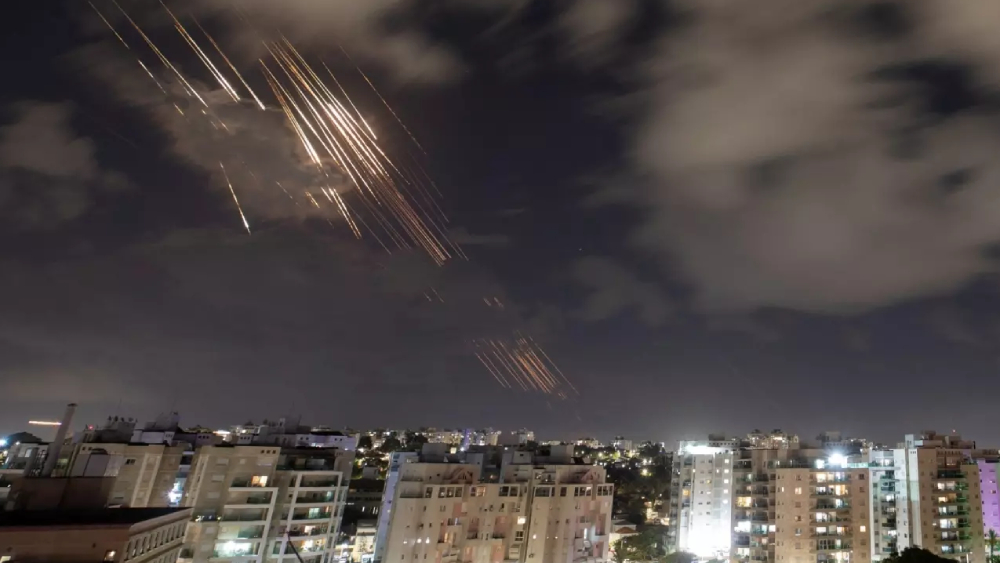
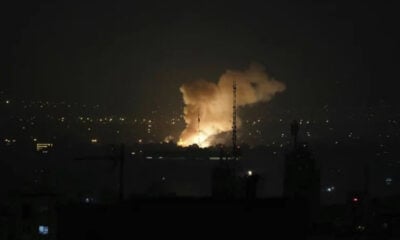
Iran launched a large-scale missile attack against Israel on Tuesday (1 Oct), escalating tensions in the already volatile region.
According to the Israel Defense Forces (IDF), around 180 projectiles were fired at Israel, prompting a coordinated missile defence effort with the United States.
Israel’s military spokesman, Rear Admiral Daniel Hagari, confirmed that the nation’s air defences successfully intercepted the majority of the Iranian missiles.
However, some projectiles reached central and southern Israel, causing minor injuries to two civilians.
In the West Bank, Palestinian officials reported the death of a Palestinian man near Jericho after being struck by a missile, though it remains unclear which side was responsible for that particular strike.
The Iranian Revolutionary Guard Corps (IRGC) confirmed the strike, stating that it targeted “vital military and security installations.”
Iran claimed that Tuesday’s missile strikes were in retaliation for the recent deaths of key figures from Hezbollah, Hamas, and the Iranian military.
It specifically referenced Hezbollah leader Hassan Nasrallah and Revolutionary Guard General Abbas Nilforushan, both of whom were killed in an Israeli airstrike last week in Beirut.
The operation also cited the assassination of Hamas leader Ismail Haniyeh, who was reportedly killed in Tehran in a suspected Israeli attack in July.
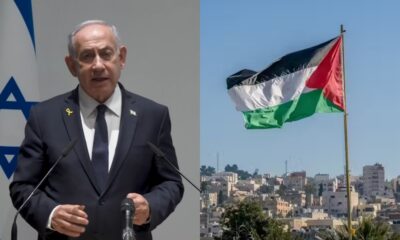
In response to the missile strikes, Israel’s Prime Minister Benjamin Netanyahu warned that Iran had made a “big mistake” and would face severe consequences for the attack.
“Iran made a big mistake tonight—and it will pay for it,” Netanyahu said.
“The regime in Iran does not understand our determination to defend ourselves and retaliate against our enemies.”
His remarks strongly signaled that Israeli retaliation was imminent, increasing concerns about a potential spiral into a broader regional war.
Iran defended its actions, with President Masoud Pezeshkian posting on social media that the missile strikes were a defensive response to Israeli provocations.
“Let Netanyahu know that Iran is not a belligerent, but it stands firmly against any threat. This is only a corner of our power,” Pezeshkian stated, warning Israel not to enter into further conflict with Iran.
On the international front, US National Security Advisor Jake Sullivan characterized Iran’s attack as a significant escalation, but noted that it had been effectively neutralized by Israel’s missile defense systems.
“At this point this attack appears to have been defeated and ineffective,” Sullivan remarked, though he acknowledged the seriousness of the situation.
US President Joe Biden reiterated the United States’ support for Israel, but stressed that his administration was in close consultation with Israeli officials to determine an appropriate response.
“We’re going to get all the data straight,” Biden said.
“We’re in constant contact with the Israeli government and our counterparts, and that remains to be seen.”
Iran’s mission to the United Nations issued a statement on Wednesday (2 Oct) defending its missile operation as a “legal, rational, and legitimate response” to Israel’s actions.
In a post on X (formerly Twitter), the mission warned that any retaliatory actions by Israel would trigger a more severe Iranian response.
“Should the Zionist regime dare to respond or commit further acts of malevolence, a subsequent and crushing response will ensue,” the mission stated.
The message also advised other regional actors and supporters of Israel to distance themselves from the Israeli government.
Military bases in Tel Aviv, targeted in the strike, have sustained structural damage, according to the IRGC. However, these claims have not been independently verified.
Videos on X (formerly Twitter) show missiles intercepted and hitting ground targets, contrary to Israel’s claim of no damage done.
International reactions have also begun to emerge. United Nations Secretary-General Antonio Guterres expressed deep concern over the continued escalation, calling for an immediate ceasefire. In a message posted on X (formerly Twitter), Guterres stated, “This broadening of the Middle East conflict must stop.”