Comments
Voters interviewed at West Coast GRC, expressed hope for PSP representation in Parliament
In a recent interview with Singapore’s Lianhe Zaobao, West Coast GRC voters expressed hope for Progress Singapore Party (PSP) candidates in Parliament. They believe this could serve as a wake-up call to the ruling PAP government, urging them to address pressing issues affecting ordinary Singaporeans.

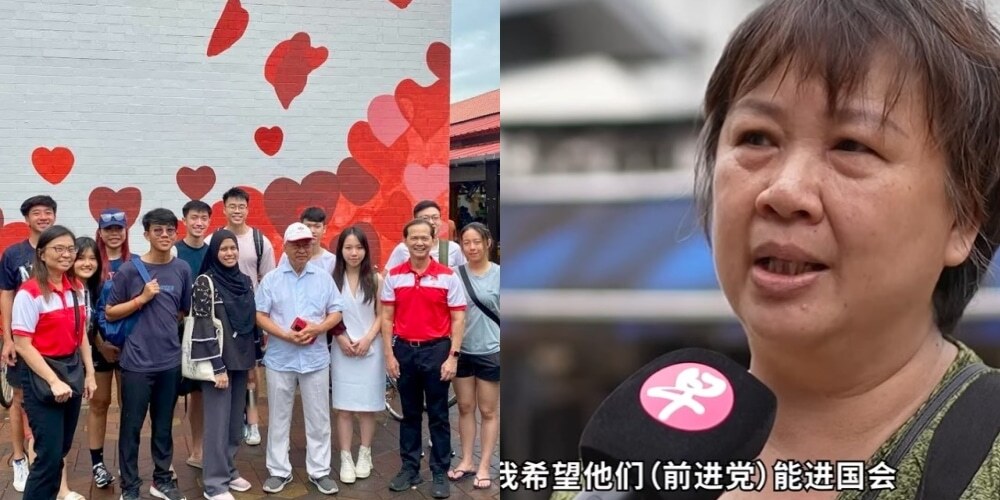
SINGAPORE: In a recent interview with Singapore’s Chinese media Lianhe Zaobao, some voters from West Coast GRC explicitly expressed hope that candidates from the alternative party, Progress Singapore Party (PSP), will be elected to Parliament.
They believe this would serve as a wake-up call for the ruling government to pay more attention to the pressing issues faced by ordinary Singaporeans.
With early election expectations looming, East Coast GRC residents anticipate a tense competition between the incumbent People’s Action Party (PAP) representatives and the Workers’ Party.
The Workers’ Party has been intensifying its ground engagement in the constituency since the last General Election.
In early July, Zaobao interviewed residents in East Coast GRC and West Coast GRC to gather their opinions on the upcoming General Election, especially in light of the intense electoral battles of 2020.
While some residents expressed confidence in the incumbent PAP MPs, acknowledging their efforts to engage with the community, others highlighted the importance of broader parliamentary representation.
They expressed a desire for the government to be more responsive and understanding of the people’s needs.
One resident remarked, “I only see him (PAP MP) once during the General Election and then not at all after that.”
“I hope the PSP can get into Parliament to represent us because we don’t have enough opposition parties in there. I hope that with them in Parliament, the government will wake up.”
Some residents also noted issues such as rising costs and the frequency of price adjustments, contrasting these with past policies under the late Lee Kuan Yew’s era.
One resident acknowledged former Transport Minister Iswaran’s contributions to the constituency but was surprised by the 35 charges, including corruption allegations against him, suggesting there could be some impact on the election.
However, she believed that with a concerted effort from the ruling party to engage with voters and understand their concerns, they could maintain support in West Coast.
During GE 2020, under the leadership of S. Iswaran and National Development Minister Desmond Lee, the PAP team narrowly secured victory with 51.69% of the votes, defeating the PSP led by veteran politician Dr Tan Cheng Bock, who garnered 48.31% of the vote, a minor gap of 3.36%.
Speculation suggests that in the aftermath of an extramarital affair scandal involving former Parliamentary Speaker Tan Chuan-Jin and former Tampines MP Cheng Li Hui, along with former Minister Iswaran facing corruption charges, alternative parties may have an increased likelihood of challenging PAP strongholds, including East Coast and West Coast.
Earlier, PSP Chairman Dr Tan did not rule out the possibility of contesting in the upcoming GE.
Under the leadership of 83-year-old Dr Tan, PSP has been actively engaging in grassroots efforts in West Coast GRC, aiming to secure support in the upcoming GE following Iswaran’s corruption scandal.
Sentiment in East Coast toward WP as competitor to PAP
On the other hand, when asked by a Zaobao reporter about their satisfaction with the incumbent PAP MPs and their hopes for change, East Coast residents emphasized the need for competition to motivate MPs to work harder, particularly in improving the conditions of their area compared to newer developments.
A young voter stressed the importance of ethics in politics, questioning what both parties and individual politicians stand for, their integrity, and their ability to connect with ordinary people.
A female resident emphasized the importance of diversity of opinion, particularly among younger voters who seek alternatives and freshness in political representation rather than sticking with the same party continuously.