International
United Nations Security Council fails to pass U.S. draft resolution on ceasefire in Gaza
UN Security Council’s bid for Gaza ceasefire fails as United States’ draft resolution was vetoed by Russia and China. Resolution sought for the determination of the imperative of an “immediate and sustained ceasefire in Gaza” but faced criticism for ambiguity and not demanding a halt to hostilities. Over 32,000 Palestinians reported dead in ongoing conflict since 7 October last year.

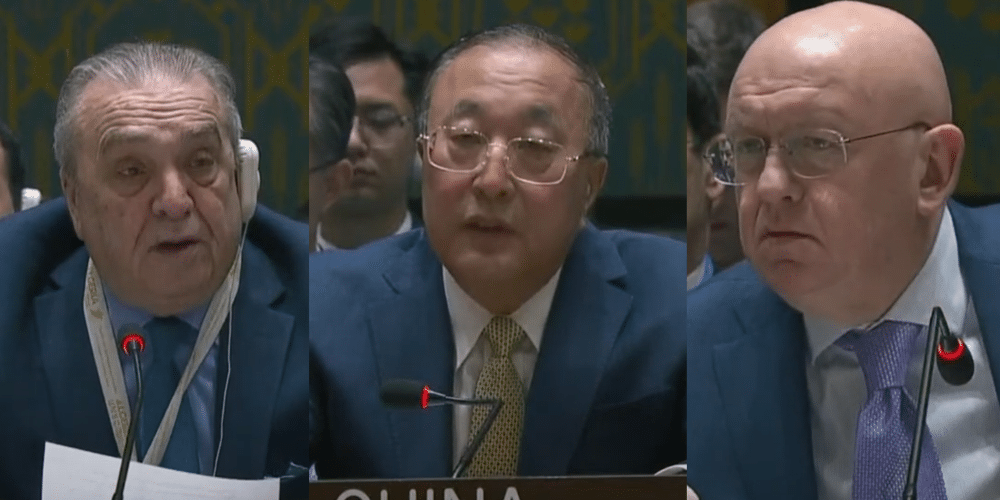
The United Nations Security Council has failed to pass a United States-drafted resolution that calls for, but does not demand, a ceasefire in Israel’s ongoing war on Gaza, after two permanent members, Russia and China, vetoed it on Friday (22 Mar).
Presented to the Council last Friday, the draft resolution received 11 votes in favour, with three against – from Russia, China, and Algeria – and one abstention, from Guyana.
United States: Advocating for a Ceasefire
The United States, having introduced the draft resolution (SC/15637), advocated for the determination of the imperative of an “immediate and sustained ceasefire in Gaza”, stopping short of directly demanding a halt to hostilities.
“It would be a historic mistake for this Council not to adopt this text (which) does much more than call for a ceasefire; it helps to make a ceasefire possible,” said US Ambassador to the UN, Linda Thomas-Greenfield.
Unlike its previous three resolutions, which the US vetoed and which called for an unconditional ceasefire, this proposal emphasized the “imperative” of a ceasefire to “protect civilians on all sides.”
It linked the ceasefire with negotiations for a truce that would include the release of Israeli captives in Gaza.
Critics and opposing nations, however, highlighted the draft’s ambiguity and its failure to unequivocally demand a ceasefire. The US accused Russia and China of prioritizing politics over progress by vetoing the resolution, contending that the draft was a genuine attempt to advance peace.
Russia: Accusations of Hypocrisy
Russia exercised its veto, criticizing the draft as “exceedingly politicized” and alleging that it effectively provided Israel with a “green light” for military operations in Rafah.
The Russian Ambassador, Vassily Nebenzia, accused the U.S. of misleading the international community by omitting a clear call for a ceasefire, reflecting a broader critique of the US’ approach to the conflict.
Nebenzia suggested the draft was more about serving political agendas than genuinely addressing the humanitarian crisis in Gaza.
China: Highlighting Ambiguity
Joining Russia, China vetoed the resolution, with Ambassador Zhang Jun criticizing the draft for avoiding the central issue—a direct call for a ceasefire.
Zhang described the resolution’s language as “ambiguous” and ineffective in proposing a path to a ceasefire in the near term, underscoring the need for a clearer and more decisive response to the conflict.
Algeria and Guyana: Calls for Clarity and Accountability
Algeria opposed the draft, with Ambassador Amar Bendjama expressing concerns shared by many in the Arab world that the text failed to adequately attribute responsibility for the violence and loss of life, particularly the over 32,000 Palestinian deaths, to Israel.
Guyana abstained, pointing out the resolution’s lack of specificity and directness in calling for a ceasefire and its failure to clearly attribute the ongoing violence and humanitarian crisis to Israeli actions.
As diplomatic efforts continue, the international community remains deeply divided over how to achieve peace in Gaza and protect civilian lives amid the conflict.
The ten elected members of the Security Council are reportedly developing their own resolution, calling for an immediate humanitarian ceasefire during the holy month of Ramadan and demanding the unconditional release of all hostages.
Additionally, French President Emmanuel Macron has announced plans to work on a new UN resolution following the vetoes.
“Following Russia’s and China’s veto a few minutes ago, we are going to resume work on the basis of the French draft resolution in the Security Council and work with our American, European and Arab partners to reach an agreement,” Macron stated at the conclusion of a European Union leaders summit in Brussels.
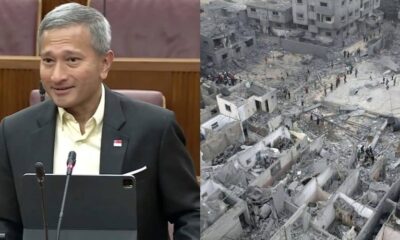
The Health Ministry of Gaza has reported that at least 32,070 people have been killed in over five months of the Israeli conflict in the besieged enclave.
The recent toll includes at least 82 deaths over the past 24 hours, with a statement adding that 74,298 people have been wounded in Gaza since the conflict began in October last year.
Prime Minister Benjamin Netanyahu of Israel has announced plans to launch a ground offensive in Gaza’s Rafah, with or without the support of the United States, as he informed US Secretary of State Antony Blinken.
“We have no way to defeat Hamas without getting into Rafah and eliminating the battalions that are left there. I told him (Blinken) that I hope to do that with the support of the United States, but if we need to, we will do it alone,” Netanyahu stated after his meeting with Blinken in Tel Aviv on Friday.
This action, likely to cause excessive civilian casualties, faces unanimous opposition from the Security Council members, as reflected in their speeches last Friday.
With an estimated 1.5 million people taking refuge there—over half of Gaza’s population—residents have no escape from Israel’s intended offensive.
Government officials from various countries — including Israel’s staunch supporter, the US — have issued warnings that an assault on Rafah would be disastrous.
Over 600,000 children would be directly in harm’s way. Furthermore, an offensive targeting the town and its surrounding areas risks collapsing the already strained humanitarian aid system that is vital for sustaining the lives of Gaza’s populace.
This article was first published on Gutzy Asia.