Labour
Singapore to increase retirement age to 64 and re-employment age to 69 by 2026
Singapore announces raising retirement to 64 and re-employment to 69 by 2026, focusing on workforce sustainability, CPF reform, and enhancing retirement security.

Singapore’s Minister for Manpower, Dr Tan See Leng, declared Monday (4 Mar) that the statutory retirement age in Singapore will be raised from 63 to 64 starting 1 July 2026.
This move is said to be aimed at providing workers who wish to extend their careers with longer statutory protection. Concurrently, the re-employment age will be increased from 68 to 69, obligating companies to offer eligible employees re-employment until this age, albeit potentially under adjusted terms, or alternatively, to provide employment assistance.
This decision, Dr Tan explained, was the outcome of a consensus among the tripartite group comprising the Ministry of Manpower, unions, and employers.
It marks another step following the government’s 2019 announcement that aimed to raise the retirement age to 65 and the re-employment age to 70 by 2030. The adjustment to the implementation date responds to feedback from various sectors for additional preparation time for both businesses and workers.
During the debate on his ministry’s budget, Dr Tan highlighted three main objectives for the upcoming work year: enhancing the employability of local workers, improving retirement adequacy for the vulnerable, and fostering fairer and more inclusive workplaces. He emphasized the importance of these goals in the context of Singapore’s demographic challenges, including falling birthrates and an aging population, which pose significant risks to the labor market and economic growth.
The Minister also outlined several initiatives to address workplace fairness and discrimination, including the introduction of two bills to deter discrimination based on age, race, and disability, as well as measures to protect platform workers. Additionally, guidelines will be published to facilitate negotiations between workers and employers regarding flexible work arrangements.
Efforts to balance the demand for foreign talent with the competitiveness of local workers were also discussed. Dr Tan announced the introduction of four new jobs transformation maps to assist employers in job redesign and employee training, covering 1.5 million local workers in industries such as generative Artificial Intelligence and sustainable finance. Furthermore, enhancements to the Career Conversion Programmes (CCPs) were announced, offering increased payroll support to employers for retraining workers.
Addressing the underrepresentation of Singaporeans in global corporate leadership roles, Dr Tan revealed plans for the Workforce Singapore agency to fund overseas training stints for Singaporeans under a new Overseas Markets Immersion Programme. This initiative aims to complement the Global Business Leaders Programme by providing local employees with international experience.
To support jobseekers facing repeated rejections, Dr Tan mentioned the development of a financial assistance scheme, emphasizing that payouts would be conditional on active job search efforts. Additionally, plans to professionalize skilled trades, starting with electricians, were discussed, though no legislation on retrenchment benefits for tradespeople is planned, aligning with the government’s broader approach to retrenchment benefits.
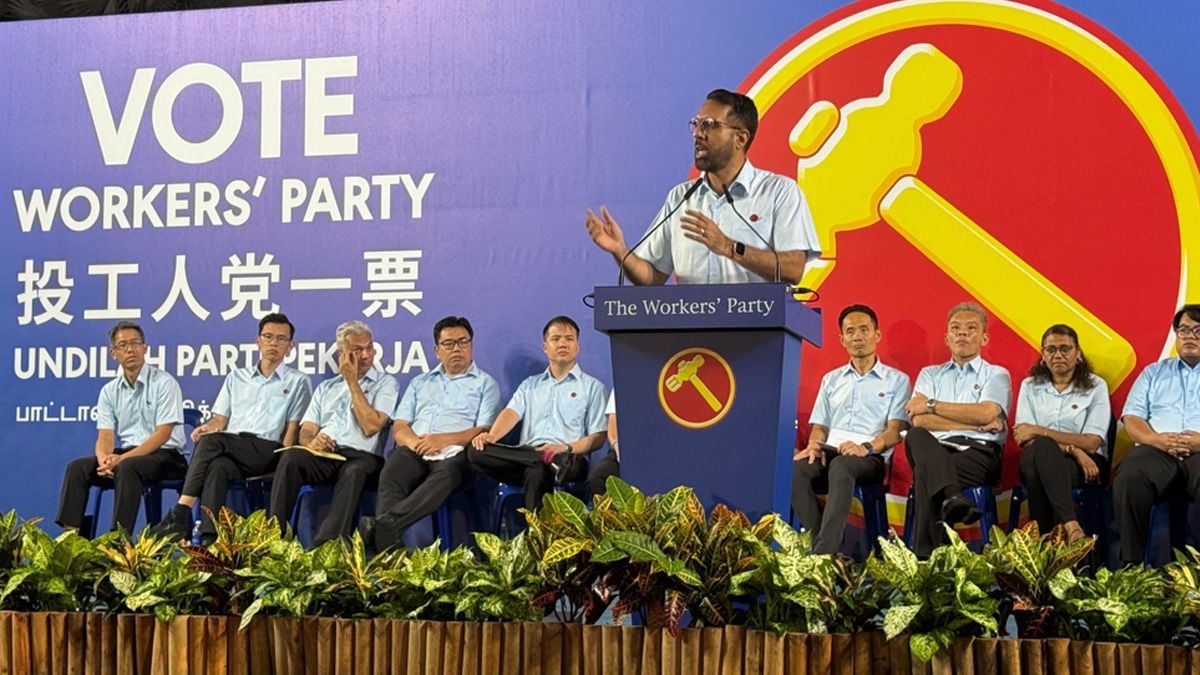
In his cut, Mr Louis Chua, Workers’ Party Member of Parliament for Sengkang GRC, had called for the reform of the outdated and archaic formula used to compute the interest for the Ordinary Account.
“This was last changed in 1999 when the ratio of fixed deposits to savings was updated from 50/50 to 80/20 to reflect the longer duration that CPF OA monies remained with CPF Board. A reform is long due,” Mr Chua stated.
In response, Dr Tan reassured that the government continues to introduce measures to enhance retirement savings for older, lower-waged earners, homemakers, and caregivers. Dr Tan highlighted improvements in CPF members’ savings, with more than 70% of active members having set aside the Full Retirement Sum (FRS) at age 55.
The minister also explained the context and impact of closing the Special Account (SA) for workers aged 55 and up from next year, a move that has stirred controversy from the public and spurred questions from MPs.
He clarified that only a small percentage of affected members would not be able to fully transfer their savings to their Retirement Accounts (RA), offering alternatives for these funds. Both the Special Account and Retirement Account currently earn 4.08 per cent interest per annum.
“It is a matter of principle … it is not about savings costs for the government,” said Dr Tan.
However, little if any, was said about how monies in the RA are returned to the members in a drip-feed manner, contrary to how SA allows members who meet their FRS to withdraw the sum without waiting for the age of 65.

This article was first published on Gutzy Asia.