Parliament
SG Parliament rejects PSP’s motion calling for changes in reserves policies
Parliament dismissed PSP’s proposal for a review of budget and reserve policies. PSP NCMP Leong Mun Wai emphasized the need for reserve disclosure, stressing Singaporeans’ rightful ownership in his closing remarks.

SINGAPORE: Parliament rejected a motion by the Progress Singapore Party (PSP) for a review of Singapore’s budget and reserve policies tailored to meet the immediate needs of the current generation.
Instead, an amended motion was passed, stating that the government to remains “fiscally responsible and sustainable” on such policies.
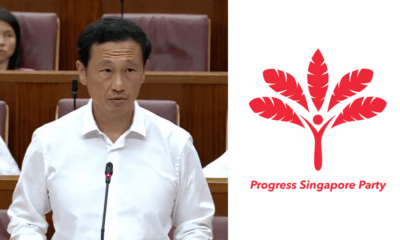
Mr Leong Mun Wai, Non-constituency Member of Parliament (NCMP) from the PSP initiated a robust debate with a motion that proposes equitable fiscal policies: halt new trust funds, waive public housing land costs, and ensure transparent reserve management for Singapore’s sustainable future.
The motion on Singapore’s public finances “calls on the Government to review its current budget and reserve accumulation policies in order to help present-day Singaporeans reduce their financial burdens and improve their quality of life while continuing to save for future generations of Singaporeans.”
However, Liang Eng Hwa, the People’s Action Party (PAP) Member of Parliament for Bukit Panjang SMC, proposed an amendment to the PSP’s motion.
The PAP’s amended motion read: “That this House calls on the Government to ensure its budget and reserve accumulation policies always stay physically responsible and sustainable in order to help present-day Singaporeans reduce their financial burdens and improve their quality of life while planning and providing for future generations of Singaporeans.”
Mr Leong in his concluding speech underscored the importance of disclosing reserves to Singaporeans, emphasizing their rightful ownership despite continuous pressure from the Workers’ Party (WP), PSP, and the public.
Discussing policies better than the current PAP offerings, Mr Leong acknowledged that PAP policies are not bad but believes there’s room for improvement.
He reiterated their proposal, asserting that it doesn’t require drawing down reserves but only a marginal slowdown in accumulation, promising superior economic outcomes for Singaporeans.
“I hope in this Chamber, we can discuss and debating to bring these policies out, and not keep saying that “whatever the opposition says, this is going to bring us down”. ”
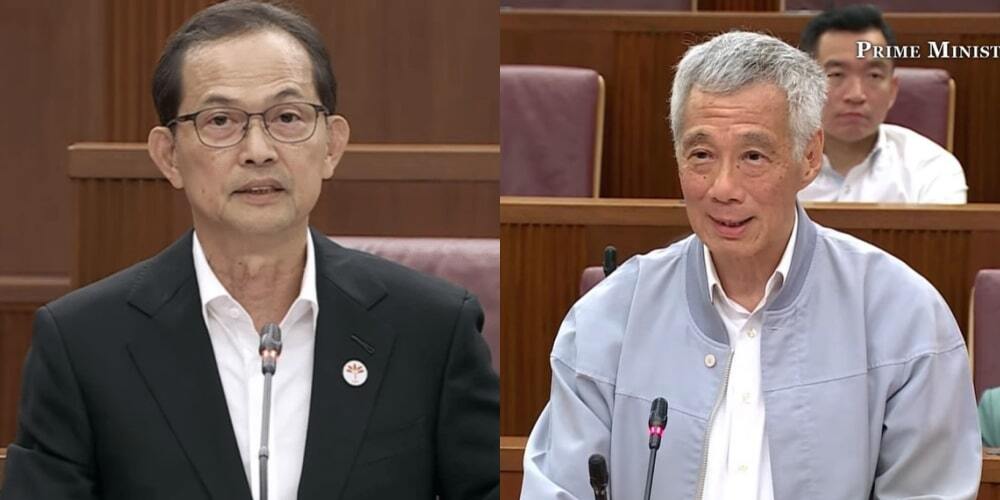
Following a seven-hour debate, the amended motion was passed, featuring contributions from 14 Members of Parliament, including Second Minister for Finance Indranee Rajah and Prime Minister Lee Hsien Loong.
PAP MPs present in the House voted in favour of the amended motion.
In contrast, opposition members, including PSP NCMPs and MPs from the Workers’ Party, voted against one of the amendments and the amended motion itself.
NCMP Leong Mun Wai calls for review of Singapore’s budget and reserve policies
Mr Leong in his opening speech contended that maintaining secrecy about the size of Singapore’s reserves was unnecessary. He asserted that the reserves would persistently grow, even if a larger share were allocated to alleviate the immediate financial burdens of Singaporeans.
He criticised the ruling party’s economic strategies, linking them to the escalating cost of living and broader social challenges.
He paid homage to the “good reserve accumulation system” established by the late Dr Goh Keng Swee but was quick to underscore the sacrifices Singaporeans have made to build these reserves.
“However, because our reserves are not accumulated from natural resources, there is a cost to accumulating our reserves, which comes from sacrifices made by Singaporeans,” he articulated, emphasizing the people’s stake in the national reserves.
PM Lee: “How big a nest egg is enough?”
Ms Indranee also refuted the assertion made by WP Chief and Leader of the Opposition Pritam Singh, emphasizing that proceeds from land sales do not contribute to the growth of reserves.
She clarified that land sales do not qualify as revenue and, therefore, should not be considered a source of new wealth, outlining the potential drawbacks of relying on land sales as revenue.
These drawbacks include vulnerability to property cycles and the incentive to maintain high land prices.
Mr Singh argued that land can be resold due to the leases it holds. However, Ms Indranee countered this by stating that during the lease period, the use of the land is forfeited.
PSP suggested an alternative approach, proposing that Singapore treat land sales proceeds as revenue spread over the lease period.
Ms Indranee acknowledged the similarity to the government’s current approach but highlighted a key difference.
Under the PSP’s proposal, the land sales proceeds are invested, and only half of the generated returns are spent.
In a straightforward comparison, Ms Indranee explained that under the PSP’s proposal, there is a direct expenditure of S$1, whereas, under the PAP’s approach, the S$1 is reinvested, yielding more than a dollar.
Ms Indranee criticized the proposal to treat land in Singapore’s reserves as having no value, asserting that it disregards the sacrifices of those who relinquished their land under the Land Acquisition Act.
“Because their land, which did go into the reserves, means something to them, means something to us when we built on it, and you should not treat it as though it is worth nothing.”
WP backs PSP’s call for transparent disclosures on reserves
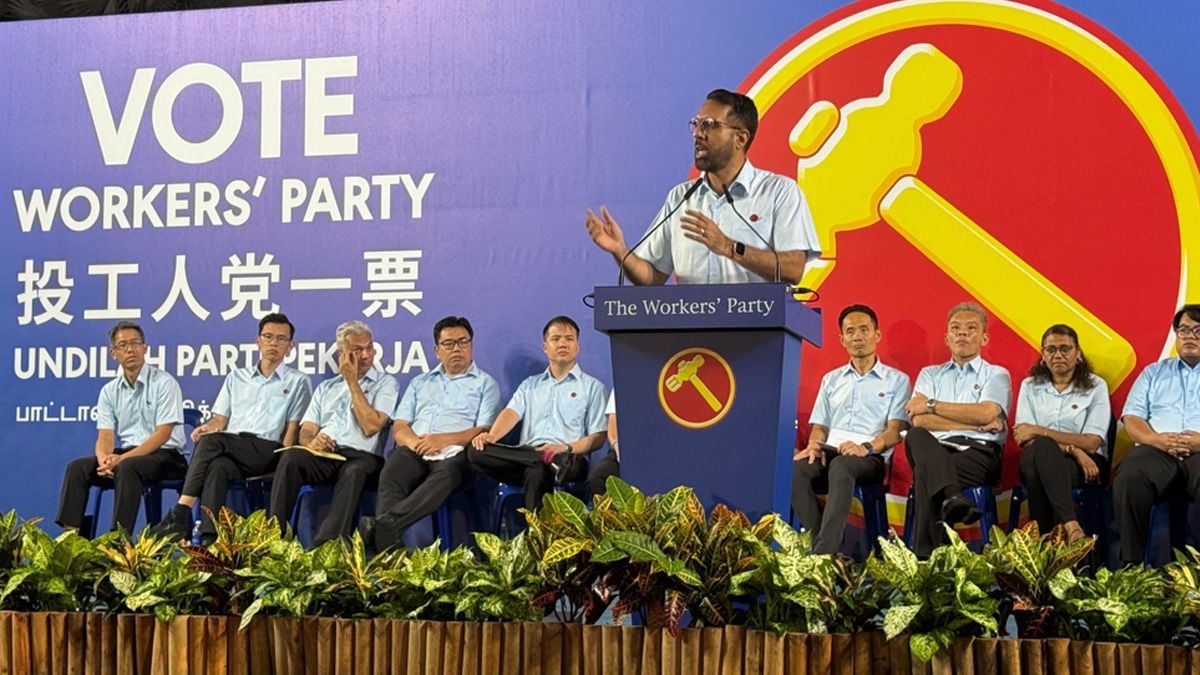
WP MPs voiced their support for the PSP’s original motion, with Mr Singh emphasizing the need for the government to disclose reserve figures not merely for the sake of transparency but to foster “mature conversations.”
The party advocated for an increased utilization of the NIRC beyond the current 50%, addressing the importance of balancing savings without imposing undue sacrifices on the present.
Associate Professor Jamus Lim, WP MP for Sengkang GRC stressed the relevance of economic principles to Singapore’s reserves, cautioning against high-handed restrictions on spending the inheritance.
He argued that such restrictions, especially in the face of rising living costs, appear paternalistic.
Assoc Prof Lim expressed his inability to support the amended motion, citing concerns that the amendments undermine the significance of a thorough review.
The sentiment conveyed was that the amendments may downplay the importance of a comprehensive reassessment.
This article was first published on Gutzy Asia.