Parliament
PAP-dominated Parliament approves bill to allow President and ministers’ global role in personal capacity
Singapore’s Parliament, with a PAP super-majority, has approved a bill that enables the President and ministers to engage in global roles personally, a decision faced with opposition from the WP and PSP.
While the bill is said to aim to enhance Singapore’s international influence by balancing official duties with global contributions, the opposition has raised concerns over potential conflicts and the implications of retroactive laws.

On Wednesday, Singapore’s Parliament approved a legal framework allowing the President and ministers to take up roles in global organizations in their private capacities, provided it serves the national interest.
This move, encapsulated in the Constitution of the Republic of Singapore (Amendment No. 3) Bill, garnered 75 votes from the ruling People’s Action Party (PAP) and faced opposition from eight lawmakers from the Workers’ Party (WP) and Progress Singapore Party (PSP).
Deputy Prime Minister Lawrence Wong presented the bill, outlining its intention to harness the “expertise, experience, and personal standing” of elected officials for Singapore’s benefit on the global stage.
“In this way, we can make the most of the expertise, experience, and personal standing of the individuals we elect to office, so as to advance Singapore’s interests and reinforce our value to the world,” Mr Wong explained.
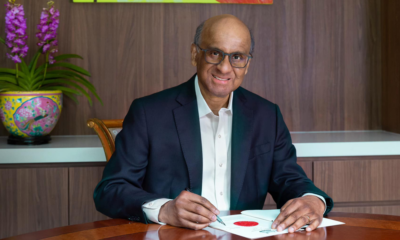
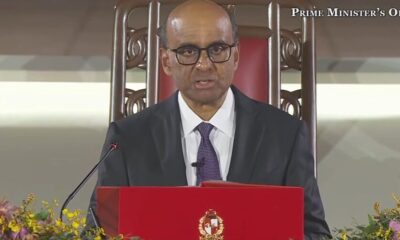
President Tharman Shanmugaratnam, a central figure in this discussion, currently holds notable international positions, such as the chairmanship of the Group of Thirty (G30) and the Global Commission on the Economics of Water.
Mr Wong emphasized the Cabinet’s view that it is in the national interest for Mr Tharman to continue in these roles, albeit in a private capacity, to contribute to global discussions and initiatives beneficial to Singapore.
Addressing potential concerns, Mr Wong clarified that these roles do not conflict with the President’s duties, noting, “If the President were to serve in these international bodies purely in his official capacity, then he would be limited to representing the official Singapore position in everything he says.”
He further assured that the President and ministers would not be permitted to keep any remuneration from these appointments.
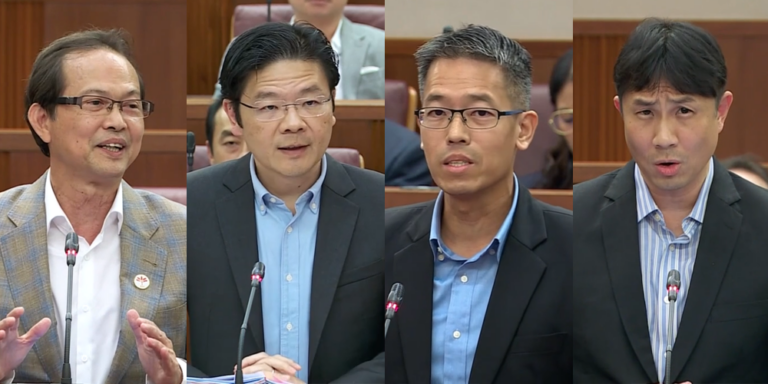
Opposition members, however, raised significant concerns. WP’s Mr Gerald Giam questioned the impact of these international roles on the President’s primary responsibilities, given the substantial taxpayer investment in the President’s office.
“It is only reasonable for Singaporeans to expect that he dedicates all his time and energy in his official capacity to meeting his promises to the people,” Mr Giam argued.
Allowing the President to take up external appointments in his private capacity could detract from his substantial public duties,” added Mr Giam. He concluded that, for this reason, WP is voting against the Bill.
Echoing this sentiment, Mr Dennis Tan (WP-Hougang) expressed concerns about the President’s capacity to fully attend to his national duties if engaged in international roles.
He noted, “However, the time spent on serving foreign and international organizations, no matter how fruitful they can be for our President and even for Singapore, equates to time not spent on his presidential responsibilities including the roles he had campaigned on.”
The debate also touched on the retroactive application of the amendments to 14 September, the day President Tharman assumed office, which raised eyebrows among opposition MPs like Associate Professor Jamus Lim (WP-Sengkang) and PSP’s Non-Constituency MP Leong Mun Wai.
Highlighting that Parliament was convened specifically for this bill, Mr Leong noted it was only shared with MPs three weeks prior. He questioned the urgency of rushing through the Bill and asked why there had been no similar rush to create this framework previously.
“The retrospective amendment of any law should not be taken lightly. The speed with which these constitutional amendments are being enacted, as well as the fact that they are being backdated, has created unnecessary unease among Singaporeans,” said Mr Leong.
“A segment of Singaporeans now perceive that the Constitution is being specially amended to enable President Tharman to continue serving in international organizations despite taking up his new office as President of Singapore.”
Assoc Prof Lim questioned, “Does this House regard the use of retroactive lawmaking in this Bill—which would retrospectively allow the President and Ministers to take on positions in their private capacity, if it serves the national interest—as sufficiently grave to justify deviating from the general principles of prospective lawmaking? Or does it border on an abuse of the Parliamentary supermajority to enact constitutional amendments of this nature at will?”
Mr Christopher De Souza (PAP-Holland-Bukit Timah) countered these arguments, suggesting that global engagement in areas like arts, sports, and inclusivity aligns with Singapore’s goals and doesn’t necessarily lead to divided attention.
He argued that Singapore’s situation isn’t binary and that it’s possible to balance international engagements with domestic responsibilities. He pointed out that private bodies see President Tharman’s head-of-state status as advantageous, seeking his personal views rather than just the government’s official stance. Mr. de Souza defended the Cabinet’s decision to allow private memberships, constrained by Cabinet guidelines, as a cautious approach.
Mr Giam countered that President Tharman, even in his official capacity, has been expressing independent views in these organizations, questioning the necessity of the new arrangement.
Mr de Souza argued that Mr Tharman’s elevation to head of state necessitates a structured framework for handling international engagements. He suggested that this approach allows Singaporean leaders to contribute their insights globally without hindering national interests.
Responding to Mr de Souza’s comments, Assoc Prof Lim then questioned the rationale behind amending the nation’s highest law to accommodate international organizations, implying it could undermine Singapore’s sovereignty.
In response, Mr de Souza sidestepped the point and went on to emphasize the importance of participating in global dialogues, arguing that it enhances Singapore’s international standing and is not pandering but rather an honor, provided it aligns with national interests and clear engagement rules.
In his closing remarks, Mr Wong stood firm against the opposition’s criticisms, asserting that the amendments were not only contitutional but also crucial for Singapore’s international standing.
He remarked, “This will enable our little red dot to shine brightly on the international stage. It’s a plus for Singapore.”
Mr Wong further addressed the opposition MPs’ accusations that the Bill was “not proper,” “unconstitutional,” or in “violation of established principles.”
He countered, “This is completely unfounded. Nothing could be further from the truth. Let’s not use this language, technical language, to camouflage political grandstanding.”
Mr Wong also took a jab at the objections raised by the opposition MPs, stating, “There is no need to oppose something that will clearly advance Singapore’s interests and bring benefits to Singapore and Singaporeans.”
He urged a consideration of the Bill’s actual impact, adding, “We have to ask ourselves – do the substance of these provisions further the interest of Singapore? Do they bring benefit to Singapore and Singaporeans?”
In response to a question from Mr Leong about the necessity of the amendment, considering that Ministers have previously taken up international roles in their personal capacities, Mr Wong explained that, in the case of Ministers, the Prime Minister can give permission for them to accept such appointments.
However, in the case of the President, the Prime Minister cannot grant this permission. He added that it is not ideal for the Singapore President to serve in an official capacity in foreign organizations while simultaneously being given the latitude to express private views, as advised by the Attorney General’s Chambers.
https://youtu.be/Al4g0–MpCQ
This article was first published on Gutzy Asia.