Opinion
Tharman takes opportunity to increase petrol tax while oil prices low
In his recent broadcast, Tharman Shanmugaratnam highlighted his longstanding connection with people. Yet, as Finance Minister, he raised petrol taxes amidst declining oil prices in 2015. Despite oil prices rebounding post-Covid, he never publicly called for a reverse of the hike, which raises doubt on his claimed ground-level understanding as Singaporeans grapple with high living costs.

by Adam
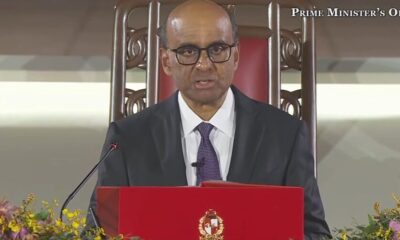
In a presidential candidate live broadcast aired on Thursday (Aug 24), Mr Tharman Shanmugaratnam told everyone that he has a “long track record” on the ground connecting with people.
“I speak from experience, and a long track record on the ground for all to see: Of connecting with people from all walks of life, constantly seeking to bridge differences in views and building community spirit,” he said.
Mr Tharman was with the People’s Action Party (PAP) for more than 22 years before resigning just a month prior to his presidential run.
During his 22 years in politics, he ran the important Finance Ministry between 2007 and 2015 as its minister.

On 23 Feb 2015, he suddenly announced the increase in petrol duty rates during a budget speech in Parliament, capturing everyone by surprise.
“To encourage less car usage and reduce carbon emissions, I will raise petrol duty rates which have remained unchanged since 2003. The duty rates for premium grade petrol will be increased by $0.20 per litre and intermediate grade petrol by $0.15 per litre,” he announced.
“With falling oil prices, pump prices after the petrol duty changes would remain lower than the levels seen in the last two and a half years. These changes will take effect today…”
Then, he quickly added a sweetener providing some road tax rebates to motorists, although the rebates were meant to be only for a one-time offset.
“To ease the transition to the higher petrol duties, I will provide a one-year road tax rebate of 20% for cars, 60% for motorcycles and 100% for the small number of commercial vehicles using petrol.”
But the truth is oil prices did not sustain at that low level for long. By 2018-2019 before Covid, oil prices climbed back to about USD$70.
In fact, after countries began to open up last year after Covid, oil prices averaged USD$100.93 in 2022. Currently, it is trading at around USD$84.

Nevertheless, Mr Tharman did not seem to have bothered to call for reducing petrol duty when oil prices skyrocketed post-Covid.
Now that he quietly resigned from the government and now wants to run for President.