Politics
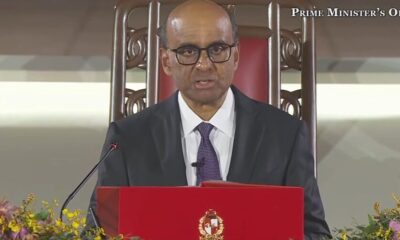
Presidential Elections must not mirror general elections, advocates former PAP senior minister Tharman Shanmugaratnam
Former People’s Action Party Senior Minister Tharman Shanmugaratnam, gearing up for the presidential elections, voiced concerns over politicizing the presidency, emphasizing its role as independent of politics.
He cautioned against treating the presidential election as a reflection of general elections, warning that such an approach would “weaken the system of the elected presidency.”

SINGAPORE: Mr Tharman Shanmugaratnam, the former senior minister and potential candidate for the upcoming presidential election, cautioned against treating the presidential election as a reflection of general elections, warning that such an approach would “weaken the system of the elected presidency.”
Speaking at a dialogue with members and guests of Teochew Poit Ip Huay Kuan on Saturday, Mr Tharman stated, “If you look at a candidate and say this person is PSP, this person is maybe more Workers’ Party, this person is more PAP. If that happens, you might as well just have a general election and let the government who is elected appoint a president. We should not let that happen. Because the president is meant to be independent of politics and government.”
Having been associated with the People’s Action Party (PAP) since the 2001 general elections and representing Jurong GRC throughout, Mr Tharman took a significant step on 8 June 2023, declaring his intention to resign from all his governmental roles and his association with PAP by 7 July 2023. This move is in preparation for his candidacy in the presidential elections.
He emphasized the importance of assessing a candidate’s contributions to society, values, empathy, and international reputation instead of viewing them through a political lens.
In response to concerns regarding the adequacy of the present presidential setup in addressing contemporary domestic and global issues, Mr Tharman voiced his apprehension. “If the system of the elected presidency becomes so politicised, then Singapore will eventually need a new system,” he commented.
Adding, “Singaporeans are still very fair. And they understand that this must not be a political election… For politics, please wait for the general election. That’s the way the system is meant to operate.”
Delving into the nuances of safeguarding the nation’s reserves, Mr Tharman described it as a more intricate role than is commonly perceived. “It’s not simple, where you wait in the office and one day the Finance Minister comes and asks ‘Can we please draw?’ The president must have a profound comprehension of the nature of a crisis and the nation’s response strategy,” he explained.
Due to his extensive background in governmental and international roles, Mr Tharman believes he is well-equipped to apply independent judgment to these situations.
Drawing attention to the independence of his thought process, he noted, “Even the opposition knows that I am independent-minded.”
He underlined the importance of a president maintaining a balanced mindset and collaborating with civil society and the government, stressing that a “solo player” would not gain respect from the public, government, or international community.
Discussing the unifying role of the president in fostering social cohesion, Mr. Tharman clarified, “My role as president would be to support initiatives on the ground, not so much introducing new policies. But I believe there is a connection between the two. Because policies will only last if there is action on the ground and if there is a culture among all of us to want to support and empower others. That’s the way which we can succeed with policies for a fair and just Singapore in the long term.”
Case for Appointed Leaders and the Risks of Partisanship
In line with what Mr Tharman has mentioned, it might be better to have the president appointed rather than elected. It should not be forgotten that the PAP changed the president’s appointment to an election following a constitutional amendment in 1991.
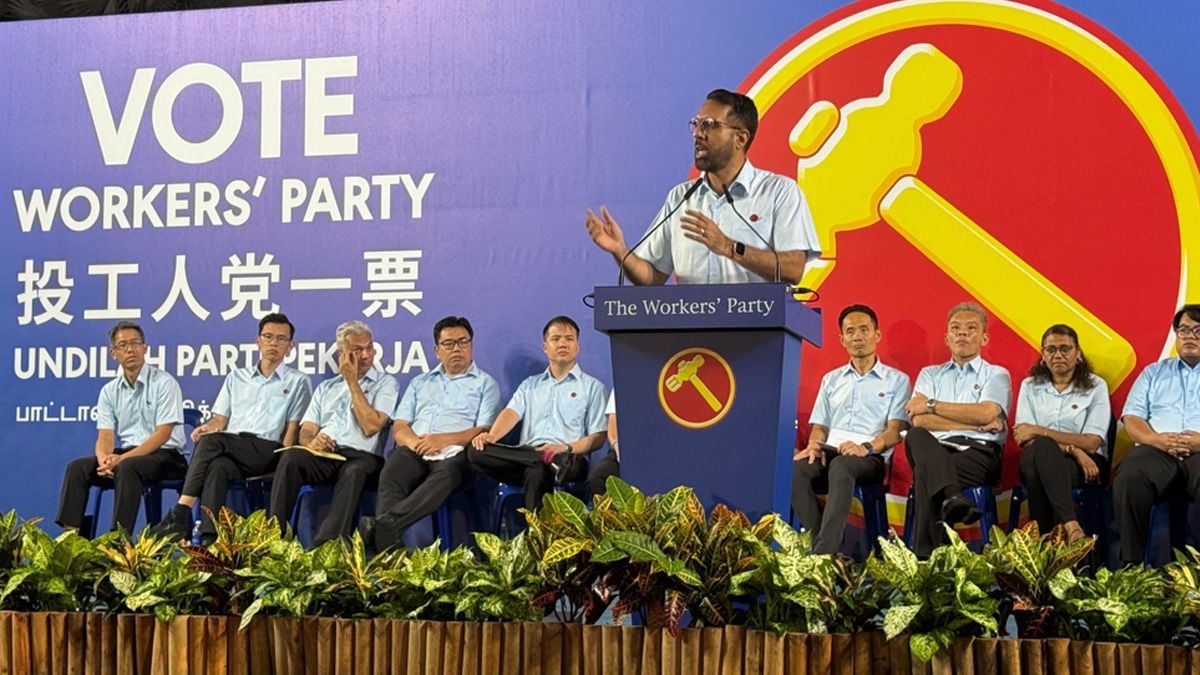
Back in November 2016, during a debate on the amendment of the Singapore constitution, Mr Dennis Tan, a Workers’ Party Member of Parliament for Hougang SMC, expressed a similar view.
He said, “The Workers’ Party studied the Constitutional Commission’s report and we concur with the Commission’s alternative suggestion to return to an appointed ceremonial Presidency and to establish a separate body for the custodial role. This body should be elected directly by the people.”
“The custodial role of the President necessitates a national mandate. The Commission noted that such an election could become politicised and divisive. Running in such an election could compel one to adopt a partisan stance, which might conflict with the President’s role as a unifier.”
Expanding on the idea of the President as a unifier, Mr. Tan elaborated, “The President must possess, in the Commission’s terms, ‘a premium on inclusivity.’ This surely encompasses the capability to connect with Singaporeans of every background, race, age, and class.”
“The stringent eligibility criteria and role combination have restricted the pool to an elite group, including former political officeholders, high-ranking public servants, or heads of large corporations.” said Mr Tan, noting how this limitation seems unnecessary as world leaders hail from varied backgrounds.
“There must be individuals from diverse professions who can unify Singapore without being a major company’s CEO or having prior political involvement. Potential leaders could emerge from charities, education, medicine, or journalism. President Sheares was a doctor, and President Wee Kim Wee a journalist. Neither would qualify under current regulations.”