Court Cases
Malaysia urged to save its citizen through action at ICJ


Prabagaran, a possibly innocent drug mule from Malaysia who was first arrested in 2012, had his Constitutional Challenge rejected by Singapore’s Apex Court earlier this month.
On Wednesday afternoon, by way of a Memorandum submitted to the Malaysian Government, he may see his case brought up to the International Court of Justice (ICJ).
Mr M. Ravi, a non-practicing lawyer and anti-death penalty activist, submitted the 10-page memorandum to the Malaysian High Commission in person. It was received by First Secretary, Nur Eliza Jemal Zainal and the Consular Officer, Siti Izayani. Prabagaran’s mother, Mdm Eswari, who has been campaigning along side the legal team and activists to save his life, was also present at the briefing.
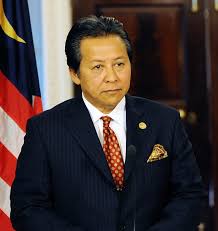
The Memorandum was addressed to Dato’ Sri Anifah Aman, Malaysia’s Minister of Foreign Affairs
This is the second ICJ referendum that M. Ravi has submitted. In 2012, he submitted an ICJ Referendum on behalf of another Malaysian arrested for drug trafficking, Yong Vui Kong.
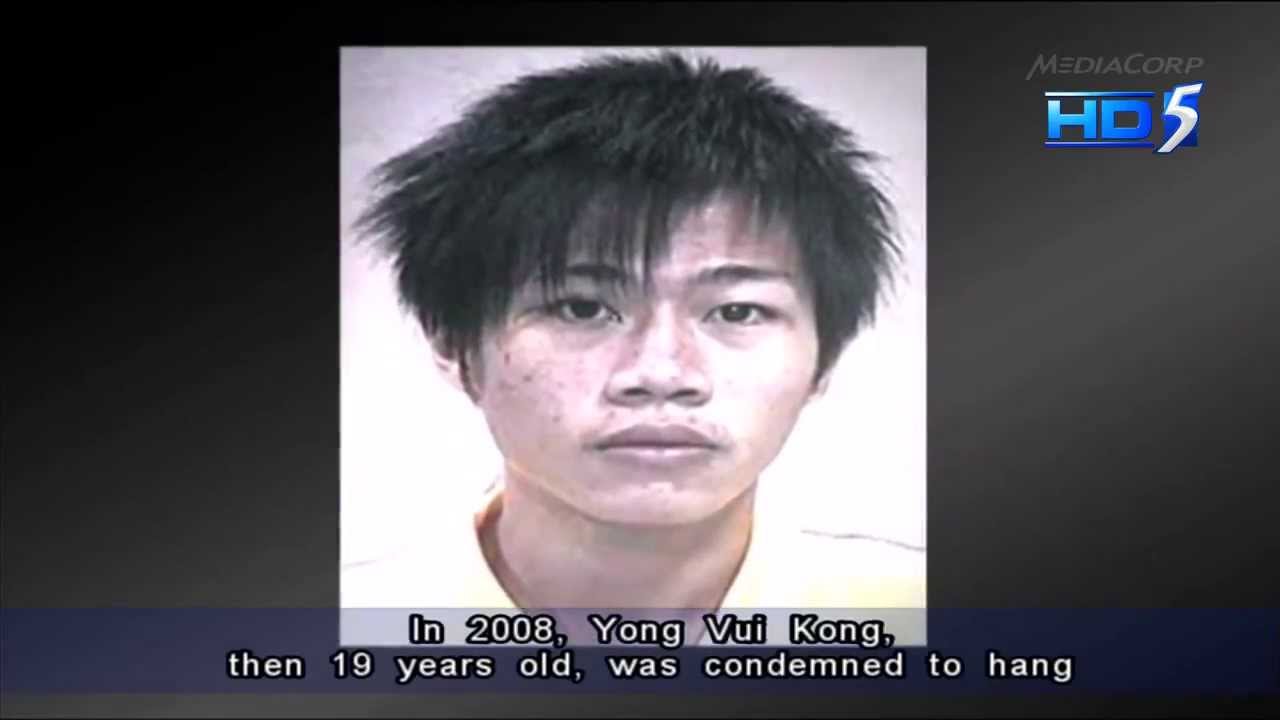
Yong Vui Kong has since been resentenced to life imprisonment and is currently serving his sentence in Changi Prison.
A pre-requisite for a case to be brought up to the ICJ is the exhaustion of all domestic legal remedies. With the Court of Appeal’s decision to reject the Constitutional Challenege of Prabagaran (and three others), and barring an extremely unlikely Presidential Pardon, this pre-requisition seems to have been satisfied.
The arguments that were already heard, and rejected, by the Court of Appeal – on circumstantial evidence, the failure to secure the attendance of material witnesses and the lack of justification to withhold a certificate of substantive assistance (if granted, Prabagaran would have been resentenced to life imprisonment, ala Vui Kong) – were raised in the Memorandum in relation Singapore’s obligation to customary international law. Namely, the obligation to uphold the right to a fair trial.
The International Covenant on Civil and Political Rights (ICCPR) – one of the two original core international human rights instruments – helps to crystallize what constitutes a fair trial under Articles 15 and 16. The Memorandum submitted that Section 33(2)(b) of the Misuse of Drugs Act is potentially in violation of the right to fair trial. The impugned provisions are as follows
 s33(2)(B) confers upon the Deputy Public Prosecutor (DPP) the power to grant convicted drug traffickers a Certificate of Substantive Assistance. If the Court has no objection to the granting of the certificate, the offender will be re-sentenced to life imprisonment. However, if the Court, or the defence counsel, for that matter, has any questions as to why a certificate was not granted, the DPP does not have to justify his decision except in exceptional circumstances (ie. when the decision was made in bad faith or with malice).
Essentially, the DPP, who first brings up the charges against the offender, is also in control of the punishment dished out to him.
This, the Memorandum argues, is in breach of the right to fair trial in the three following ways
1. Disregard for the principle of Separation of Powers. The DPP, a public servant, is exercising judicial power by deciding if the offender has assisted substantively and consequently deciding his faith. Such a matter should be one that lies with the judiciary. This is also in breach of a core tenant of natural justice: Nemo judex in causa sua (No man should be a judge in his own cause)
2. Absence of an opportunity to make a case before an independent and impartial tribunal. The offender doesn’t know the grounds on which the DPP’s decision to deny him the certificate was made. He also has no avenue to contest the DPP’s decision.
3. A lack of precise understanding as to what constitutes substantive assistance. Consider this, if on the one hand, a mule gets hung because of his lack of substantive assistance, while on the other, another man from a higher rung of the drug syndicate gets re-sentenced to life imprisonment as a result of his deeper involvement, doesn’t such a scenario spit on the face of the policy objective of s.33(2)(b) by protecting the guilty and culling the most vulnerable? Also, what if an offender is co-operative but as a result of the incompetency of the authorities, the leads couldn’t be acted upon efficiently? What if the assistance provided only becomes ‘substantive’ after the offender is hung? From these examples alone, one can clearly see why the Memorandum states that the “DPP’s determination of whether substantive assistance was provided is too fluid and unstable.”
Although the Singapore Government did not ratify the ICCPR, the memorandum makes the case that Singapore will still be customarily bound to the rights enshrined in Articles 15 and 16 of the ICCPR as treaty obligations can evolve into custom. In the evolutionary process, they also bind states that do not ratify the original treaty. Citing Nicaragua v United States (1986), the Memorandum contended that the obligation to provide a fair trial for the accused has indeed evolved into customary international law.
Mr Ravi shared that he intends to go to the Malaysian capital during the first week of January to campaign alongside Lawyers and Anti-Death Penalty Activists there. He will also be meeting some Members of Parliament to seek their support in urging the Malaysian Government to bring Prabagaran’s case to the ICJ.
I will be subsequently lobbying the Malaysian Parliament and be attending a Press Conference in Malaysia to persuade the Malaysian Government to initiate legal action at the International Court of justice which is the only hope left for Prabagaran. Great to know that so far I I have received some good support from both ends of the political divide in Malaysia!
The ICJ Memorandum is attached below.
Fullscreen Mode